Building LUMAN — bakery business management application
A management system I built for my own bakery, and relied on every day for four years to manage its production, sales, finances, and staff.
 Eric Onuoha8 Dec 20236 min readBuild · Business software
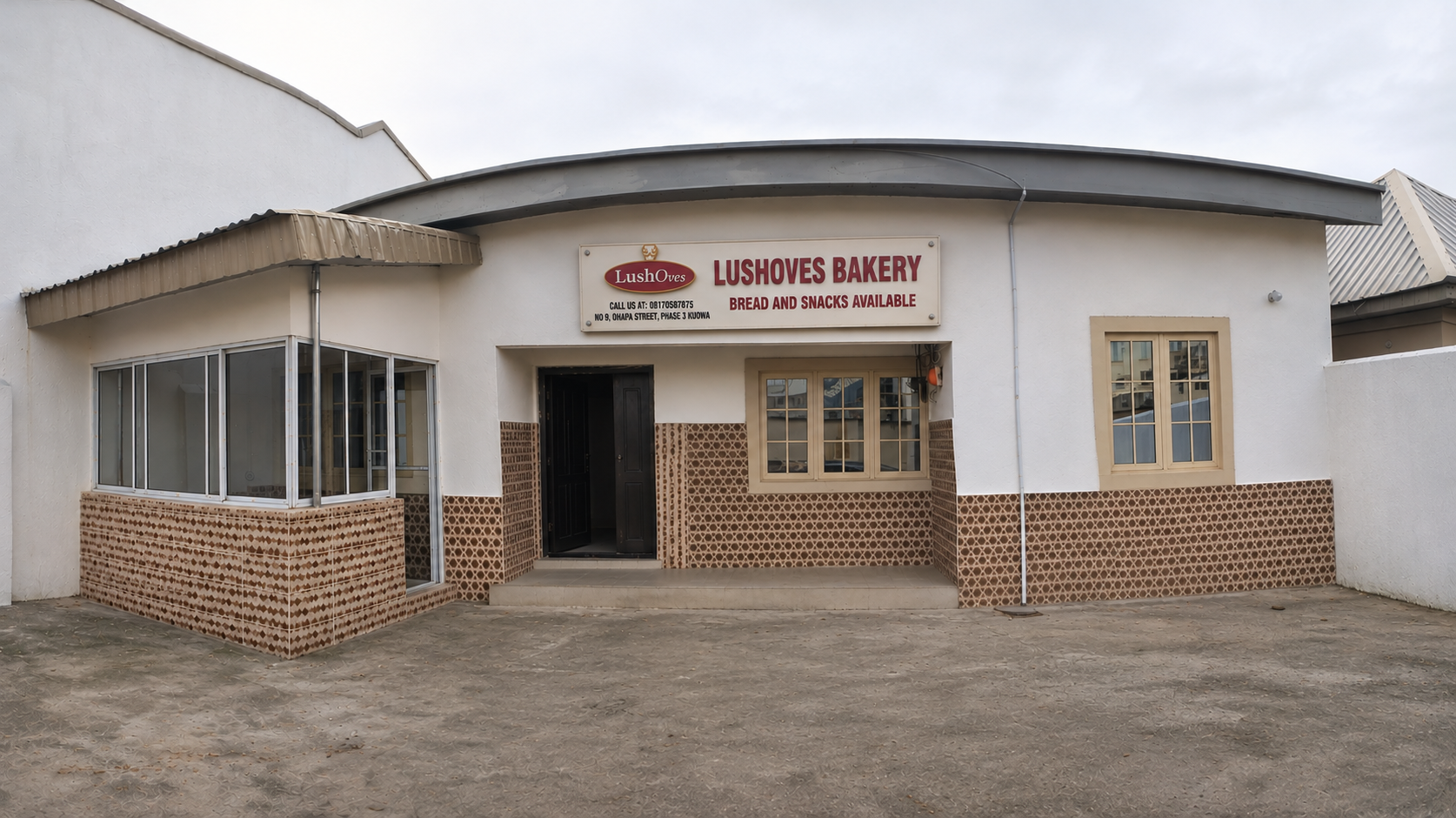
There is a difference between building software for someone else and building something you have to depend on yourself. I learnt that through LUMAN.
For four years, I ran Lush Ovens bakery (Trademark: LushOves) as Managing Director. To support the day-to-day operations, I designed and developed a management system to keep the business organised. What started as an attempt to solve a few operational problems became the system we relied on to manage most of the business.
It was an unusual combination of responsibilities. I was thinking about production schedules and stock levels one moment, and database structures, user access and application features the next. And I was building something that had to work beyond my laptop. People had to use it, records had to make sense, and the information it produced had to help us make decisions.
01 — At a glance
| Business | Lush Ovens Bakery |
|---|---|
| My role | Managing Director; designer and developer of LUMAN |
| Team | A manager and 8–10 staff |
| What I built | A management system covering production, inventory, sales, expenses, cash flow and staff administration |
02 — The challenge: keeping track of everything
Running a bakery is much more than producing and selling products. There are ingredients to buy, production to plan, stock to reconcile, distributors and customers to serve, staff to coordinate, and expenses and payments to account for.
The bakery could produce up to 5,000 loaves a day, in a range of sizes, and three sales representatives took them out to shops in small cargo buses. So on an ordinary working day, several things happened at once. A production figure needed updating, a sales representative's load had to be accounted for, an expense needed recording, a payment had to be reconciled. Each task was manageable on its own. At that volume, keeping track of all of them, consistently, was another matter.
At Lush Ovens, information was spread across paper records, spreadsheets and conversations between staff. Finding a figure, or working out what had happened over several days, took more effort than it should have.
I wanted one place where every part of the business could be recorded and connected. Rather than adapt an off-the-shelf application to our operations, I decided to build one. That let me shape the features around the problems we were actually facing, and change them as the business evolved. That was how LUMAN took shape.
03 — The solution: Lush Management System (LUMAN)
LUMAN grew into four connected modules. Each covered a different part of the business, but their real value came from being able to see them together.
Production and inventory. Daily production, opening stock, sales, closing stock, and physical counts across each bread category. Comparing what had been produced with what had been sold and what remained made stock movement easier to follow, and differences between recorded and physical quantities easier to spot.
Sales and distribution. Sales across direct customers, sales representatives and customer orders, with a separate price list for each channel. It showed how products moved through the bakery's distribution network.
Expenses and finance. Spending on ingredients, fuel, salaries, maintenance and other operating costs, alongside sales, bank deposits, debts, repayments, expected cash balances and cash flow. Instead of looking at sales in isolation, I could see how money moved through the business and where it was going. People and administration. Staff records, access control, recruitment, reminders, and records of statutory payments, taxes and levies. These were the least visible parts of running a bakery, but just as important to keeping it organised.
The aim throughout was to have fewer operational details depending on someone's memory, or on a record that might be hard to find later.
04 — From recording information to making sense of it
One of the most interesting parts of using LUMAN was seeing what happened once enough records had built up.
At first, the priority was simply to capture information consistently. Over time, I found myself returning to the system for more than just entering or looking up figures. I wanted to understand what those figures were telling me.
If production increased, what happened to sales? Were stock differences recurring? How did expenses compare with sales over time? Did the direct sales channel behave differently from orders handled by sales representatives?
These were ordinary management questions, but having months of records in one place made them much easier to investigate. I could compare periods, look for patterns, and make decisions on something more solid than recollection.
The system's database exports give a sense of the scale. They hold about 53,124 units of production and 52,418 units of sales across three bread categories, alongside hundreds of daily financial, sales and inventory records and more than 2,000 itemised expense entries. These are counts from the available exports, not audited business results or totals for the full four years.
Having a system didn't make every problem disappear. Records still had to be entered correctly, stock still had to be counted by hand, and discrepancies still needed investigating, sometimes with manual adjustments for operational realities. A management system is only as useful as the information that goes into it, and the people and processes behind that information matter as much as the software.
05 — What running the business taught the developer
Looking back, the most valuable part of the experience wasn't the number of features I built. It was having to live with the decisions behind them.
Building for a real business changes how you develop software. When you depend on what you build, you can't stop at getting a feature to work. You have to consider who will use it, whether it makes sense to them, what happens when information is missing, and how it fits into an already busy working day. A feature that looks reasonable in development can become cumbersome when someone has to use it repeatedly while juggling other responsibilities.
Digitising a process doesn't automatically improve it. Sometimes the problem wasn't a missing feature but the process itself. Some things needed clearer procedures, better validation or more consistent record-keeping, so I adjusted how we worked alongside improving the application.
Running the business made me a better developer. I wasn't building for an imagined user. I was building for people I worked with, processes I was responsible for, and problems I ran into every day. I had to think about the operational consequences of technical decisions, not just whether the code worked.
The experience also changed how I think about technology and data, and helped nurture an intense passion for data and its ability to tell stories. The questions behind LUMAN are ones I now ask in other settings: What information do we need? How do we collect it? How do we make sense of it? And how can it help us make better decisions?
06 — Where it stands now
Lush Ovens is on pause for now. I stepped aside to give more time to other professional and personal projects, and the bakery's operations are on hold.
LUMAN remains one of the most formative projects I have worked on. For years, it brought together responsibilities that rarely sit in the same job description: developing software, managing a team, overseeing operations, and working with real business data.
I look back on it with real satisfaction, because it was built around real problems, used in real operations, and improved through experience. It showed me what happens when something you build becomes part of how people work every day, and it still shapes how I think about technology, data, and problem-solving.